Friday, October 28, 2011

The street….


Coming back to the same place after some time makes you see things different. As this blog is not so much about text, but about seeing things…..  So after some months you certainly happen to see “other things” or “new things” in the street where you have been many times before.


A little mount of sand… ants? Or is there somebody else living on the edge of the road. 


Why didn’t I see these footprints in the concrete before?


Common knowledge tells us there is a bus stop in front of our apartment bloc…. But no sign anywhere. A bit further there is also a bus stop… I only saw the sign this week, although I am walking there already for 5 years. Normally bus stops in this region are very obvious and obnoxious; firm concrete hideouts to protect us from sun and rain.


By then I got completely into local pavement. The municipality orders the use of tiles with a certain pattern for the pavement (sidewalk). Most of these are old and worn. 


There are also other patterns, or just concrete, or bricks, or sand….. 


Don’t think you can walk without using your head. There are holes, bumps, steps, declining parts for cars, lower parts to lead water to the gutter when people clean their patio’s…. 
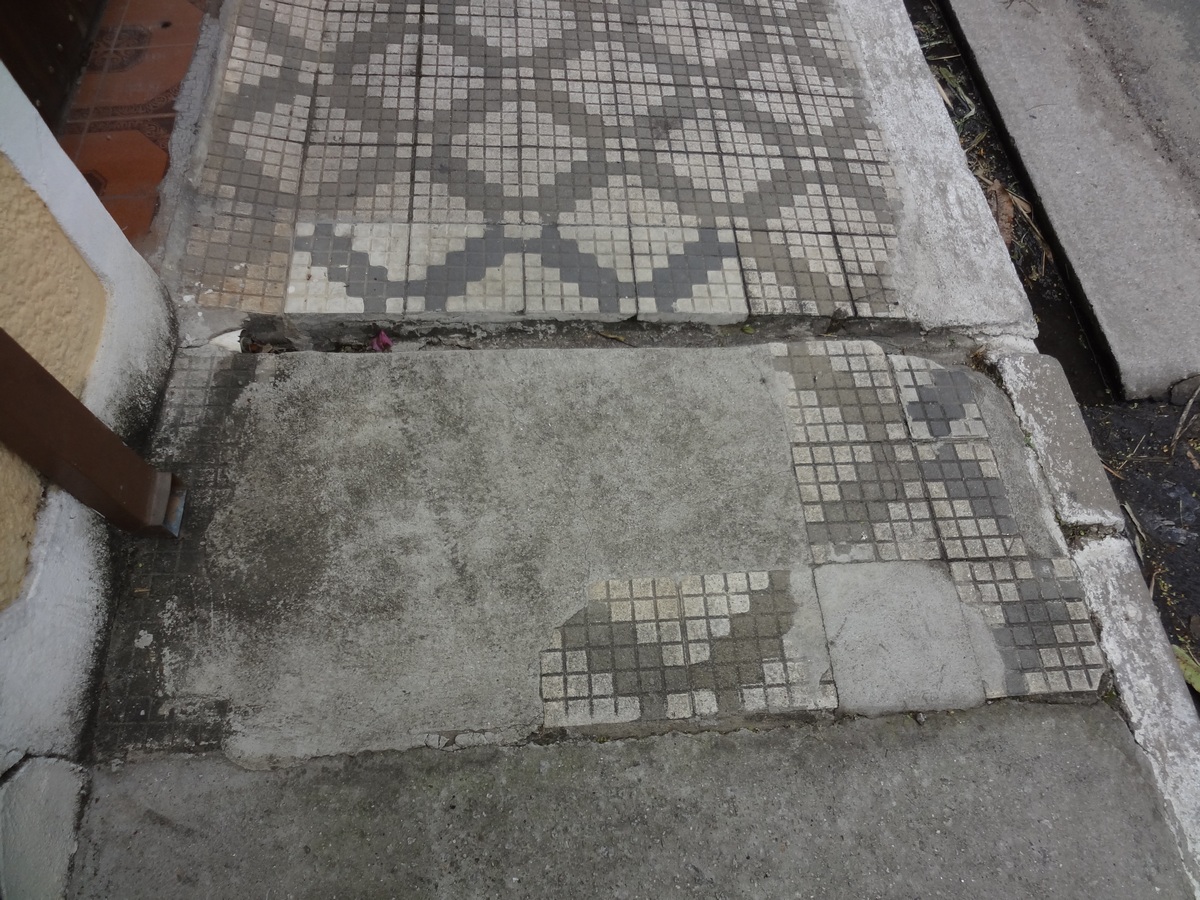

I asked about what happens when somebody trips over a gutter or some other irregularity….. No one seems to know. Walking on Havaianas probably prevents a lot of stumbling. It could take a long time before you know who has to pay your hospital bill.


And yes, what do you see in every other street…..  If we can’t go to Copacabana we will just have the pavement in front of our houses!


Of course there is nothing like the real thing…..


Friday, October 14, 2011

It smells like autumn……


Fresh, blue sky and almost no wind.  It smells like autumn: Herbs, rotting leaves and mushrooms. The weather is crisp (and crunchy too - like “Dennis the Menace” once said). 


After walking around a bit I decide to go to the Arboretum in the Delftse Hout. It is a like a small sheltered valley divided into differend habitats. (I just hear on a BBC gardening program that an Arboretum is the place to go in autumn!!)

Orange and yellow leaves float on the water. Most leaves are still on the trees. The reeds are dying off.


On my way to the Botanical Garden of the Technical University in Delft it is obvious that winter is coming. Dead leaves gather in quiet corners against a wall.


The fallen berries (very poisonous) of the Taxus Baccata are alarmingly RED. 


The first thing that catches my eye in the Botanical garden is a sign calling attention to the fact that Delft University is working on alternative ways to get Taxol from the needles of the Taxus tree. According to the text Taxol is the most expensive drug in the world in the fight against cancer.


The Botanic garden is hidden behind some old university buildings. It is hard to imagine that the entrance on a busy street corner gives way to an unexpected green oasis in the city of Delft.


Although the greenhouse is not as grand as the one in Leiden it is worth visiting. It contains tropical and subtropical plants. In some places you see additional educational information.

But the best part are the mini quails. I was warned that I had to be carefull not to release them from the greenhouse. At first I thought they were all gone. I didn’t notice them. But then there was this soft squeaky sound in the “bush”. Surprise; they are really mini. A few extremely well camouflaged chicks were walking almost under my feet. Keeping in mind that they are completely deaf……. 


Friday, September 23, 2011

The Dordrecht Museum


It was a long overdue birthday present…. A visit to Dordrecht and the Dordrecht Museum.  


We had heard a lot about the splendid renovation (2008 – 2010) by architect Postel  

The museum is one of the oldest museums in the Netherlands. It dates from 1842 and it is housed in a former orphanage and pest house, dating from the 17th century. How nice to be in a building like this. The architect sure has done a perfect job. Just being there is almost enough.


So arriving at the museum after our train trip and seeing the inviting restaurant, we decided to start the day with coffee and a pastry.  Sitting in the conservatory it is as if you are sitting outside… but you are not. The restaurant area consists of different spaces and is also a meeting place for cultural activities.


If you have been in the Amsterdam Hermitage then you might notice that the interior design is done by the same designers Merxx and Girot. Their find for this museum are the “jewel boxes” high legged cupboards that contain drawings and prints on paper. You pull a drawer and there is another “jewel” to be admired. 


Apart from the beautiful building ...................

................................. there is a good collection of Dutch paintings from over a period of 400 years. The city of Dordrecht was a wealthy city. Part of this wealth was due to the wine trade. 

part of a wooden frame once belonging to the Wine guild

Rich citizens donated money or collections to the museum. There are works of The Hague School and Amsterdam Impressionists. The collection has two main focus points: the 19th century and the 17th century.

Very special is the large collection of painting from AryScheffer who was born in Dordrecht and later lived in Paris.  

We spend a good part of the day looking at the different paintings, drawings, statues etc. 

Here just some items….


“The Amsterdam Lauriergracht in winter” By George Hendrik Breitner 1857-1923
 (The Hague School).


And this painting of a dead hare by Joris Ponse (1723-1783).
This fly won’t go off (I almost tried) … it is very life like!


“View of the Oude Maas at Dordrecht” by Jan van Goyen 1651
A favourite of the public.

The weather was nice, so we did a quick tour of Dordrecht. Yes we need more time to visit Dordrecht. The city deserves it. Maybe a next time....


Sunday, September 4, 2011

Another Romanian Monastery…. Moldovita


Not only the Voronet monastery has beautiful paintings. Also the monastery of Moldovita has stunning paintings.


Moldovita dates from 1532; around 50 years later then Voronet. The paintings date from 1537; so just a few years later then Voronet. 


One of the most interesting paintings is the large mural about the siege of Constantinople. In fact it refers to two sieges; one is the siege in 1453 and the other an earlier one by the Persians. The Romanians wanted the help of the Virgin Mary fight off the Ottoman oppression.


The“Tree of Jesse”.


Biblical scenes.


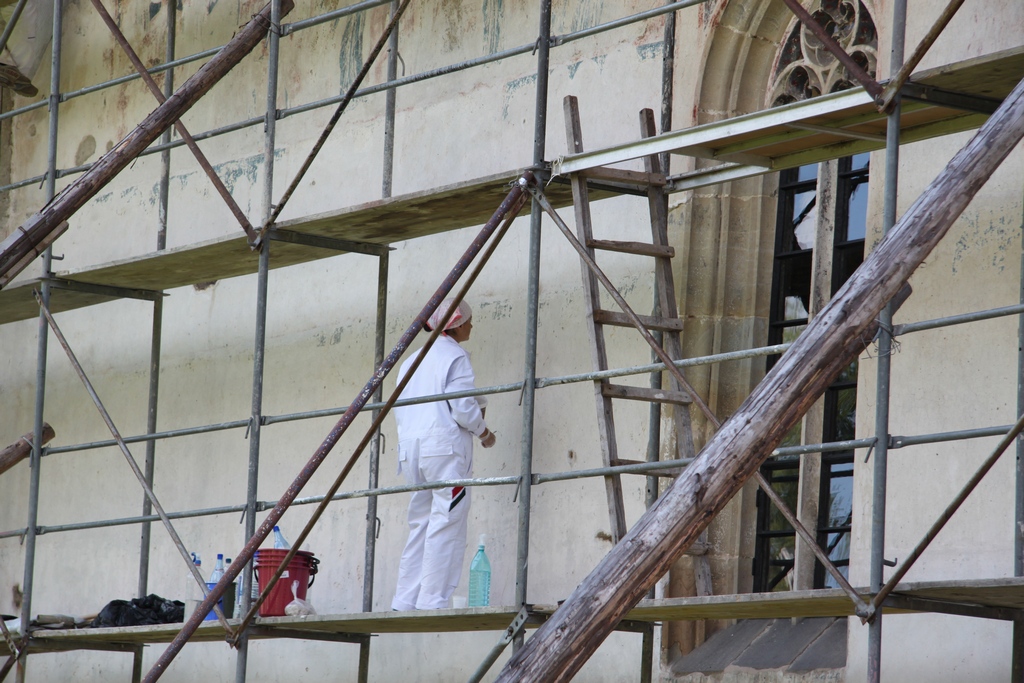
I didn’t take pictures of the porch because there was a lot of scaffolding. It is a never ending job to take care of this important heritage.


Sadly there are always people who want to put their names everywhere.


For more historic facts please use the Wiki and other information on internet

Wiki 


Saturday, September 3, 2011

The Voronet monastery


The Voronet monastery lies in Romania. Like the monastery of Moldovita it is  famous for its murals. Voronet is especially known for its blue color.


The church was founded in 1487 by Stephen the Great. There are a lot of facts about the Voronet monastery, but I will leave that to the Wiki and the Romanian touristic websites. Here I will show first pictures of the church and then some details of the paintings.


Everything I really want to say about Voronet is just look!! Look at the beautiful murals on the outside of the church. (It is not allowed to take pictures inside.)


No wonder it is called "the Sistine Chapel of the East". They look amazingly fresh, as though they were painted not so long ago. In fact they date from 1534/35. Only on the north side of the church the weather has erased most of the frescoes.


On the south facade there is the “Tree of Jesse” (the family tree of Jesus). Plato and Aristotle seem to belong to the family. Look at the shade of blue; the “Voronet blue”. How they made it is even now a mystery.


The West facade depicts the Last Judgment.


 It is obvious who goes to heaven – the people with the golden halos - and who to hell. 


Look at the little gray devils and the creatures of Noah's ark.


The small white persons in a kind of boxes or held up in cloths are the “souls”.

The walls are full of apostles, evangelists, saints, martyrs and a Biblical calendar. 


More info:  
Wiki